
Lawptimize Admin
Gödel, Recursive Language Models, and the Limits of Artificial Intelligence in Law
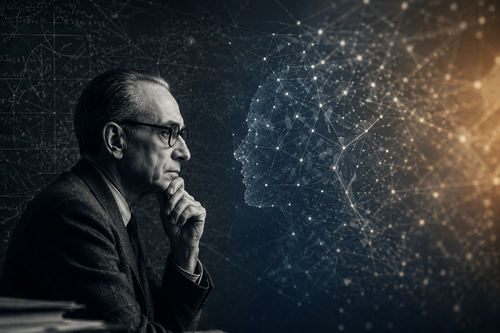
The rapid advancement of Large Language Models (LLMs) has reignited longstanding questions concerning the nature of intelligence, reasoning, and the possibility of machine-assisted judgment. Recent developments in recursive language architectures have further intensified this discussion. By allowing models to decompose problems into sub-problems, revisit intermediate conclusions, and generate increasingly sophisticated chains of reasoning, these systems appear to move beyond simple pattern prediction toward something resembling structured cognition.
Such developments naturally invite speculation regarding the future capabilities of artificial intelligence. If language models continue to improve their capacity for reasoning, planning, and self-reflection, might they eventually overcome many of the limitations that currently constrain their performance? More provocatively, could sufficiently advanced systems ultimately replicate or even surpass forms of human judgment that have traditionally been considered uniquely resistant to automation?
These questions are particularly relevant to the legal profession, where a growing number of practitioners are beginning to incorporate generative AI into research, drafting, due diligence, and knowledge management workflows. Yet before considering what artificial intelligence may eventually contribute to legal reasoning, it is worth revisiting one of the most important intellectual discoveries of the twentieth century: Kurt Gödel's Incompleteness Theorems.
In 1931, Gödel demonstrated that any sufficiently expressive formal system capable of representing elementary arithmetic necessarily contains propositions that are true but cannot be proven within the system itself. Furthermore, no such system can establish its own consistency from within its own formal structure. These results profoundly altered the foundations of mathematics and logic, challenging the prevailing belief that all mathematical truth could ultimately be derived from a complete and internally consistent set of axioms.
Gödel's work did not imply that formal reasoning is ineffective, nor did it suggest that mathematical systems are somehow deficient. Rather, it established a fundamental limitation: formal systems possess boundaries that cannot be transcended merely through the addition of further rules, procedures, or computational power. There will always exist truths that remain inaccessible from within the system itself.
The relevance of these ideas to contemporary artificial intelligence is subtle but significant. It would be incorrect to argue that Gödel's theorems directly constrain Large Language Models in a formal mathematical sense. LLMs are not axiomatic systems, nor do they operate through formal proof construction. However, Gödel's insights remain instructive because they highlight a broader principle concerning the relationship between complexity and completeness.
Much of the contemporary discourse surrounding artificial intelligence implicitly assumes that sufficiently advanced architectures will eventually overcome the limitations of current systems. Larger context windows, recursive reasoning frameworks, enhanced memory mechanisms, and greater computational resources are frequently presented as incremental steps toward increasingly general forms of intelligence. Underlying this perspective is the assumption that complexity itself may eventually resolve the shortcomings of existing models.
Gödel's work suggests caution toward such assumptions. Complexity does not necessarily eliminate incompleteness. The introduction of recursive reasoning may dramatically improve the performance of a system, but it does not follow that recursion abolishes the existence of limits. A system may become increasingly sophisticated while remaining subject to fundamental constraints arising from its own structure.
This observation becomes particularly relevant when artificial intelligence is applied to law.
Legal reasoning is often mistakenly treated as a problem of information retrieval. If only a system could access sufficient legislation, judicial decisions, procedural rules, academic commentary, and factual information, the reasoning process itself might appear largely solvable. Such a perspective naturally favours technologies that emphasize search, retrieval, summarization, and textual synthesis.
However, legal practice rarely operates in this manner. The most difficult legal questions are seldom characterised by a lack of information. More commonly, they arise from competing interpretations, conflicting principles, uncertain evidence, strategic interaction between parties, procedural complexity, and the exercise of professional judgment under conditions of uncertainty.
In this respect, legal reasoning differs fundamentally from many computational tasks. The challenge is not merely to identify relevant authorities or generate plausible arguments. Rather, it involves evaluating alternative pathways, balancing competing risks, and selecting among multiple strategically viable options whose consequences may only become apparent over time.
The distinction between reasoning and judgment is therefore critical. An artificial intelligence system may generate legally coherent arguments, identify persuasive authorities, and even recursively refine its own analyses. Yet these capabilities do not necessarily resolve the deeper problem of strategic decision-making. The existence of multiple plausible legal positions often means that the central question is not what can be argued, but which course of action should be pursued.
This observation has important implications for the future development of legal technology. Much of the current legal AI landscape remains focused on automating information-centric tasks: document review, legal research, contract analysis, and drafting. These applications undoubtedly deliver significant value. However, they address only part of the broader challenge faced by legal professionals.
The more interesting opportunity may lie in the development of systems capable of supporting strategic reasoning rather than attempting to replace it. Such systems would not seek to function as autonomous arbiters of legal truth. Instead, they would assist practitioners in navigating uncertainty, evaluating competing scenarios, modelling risk, and understanding the strategic implications of alternative decisions.
Viewed from this perspective, Gödel's work acquires renewed relevance. Not because it disproves artificial intelligence, nor because it establishes a direct mathematical limitation on language models, but because it reminds us that intelligence cannot be reduced entirely to formal reasoning. The existence of undecidability, incompleteness, and irreducible uncertainty suggests that there will always remain domains in which judgment retains a central role.
Law is one such domain.
As artificial intelligence continues to evolve, the legal profession should embrace these technologies enthusiastically. Their capacity to augment human capability is already substantial and will undoubtedly grow. Yet the most valuable applications may ultimately emerge not where AI seeks to replace legal judgment, but where it enhances the ability of legal professionals to exercise judgment more effectively.
The future of legal technology may therefore depend less on the pursuit of artificial legal certainty and more on the intelligent management of legal uncertainty. In that regard, the enduring lesson of Gödel's work is not that reasoning has limits. It is that understanding those limits may itself be a prerequisite for wisdom.
About the author
View the algorithms of Lawptimize applied in litigation. Book a demo with us.
Data Driven Litigation for Legal professionals and clients.
London / Singapore / San Francisco
Email. lawptimize@lawptimize.com